Author: sdhakad-yogapeace

Solution for Stomach Problems – Part 2

Dear Friends,

A warm and smiling welcome to all of you!
We greet you once again in our article series “One Step from Health to Happiness.”


Today’s Topic – How to Practice Vajrasana If You Have Knee Pain

In the previous article, we discussed how Vajrasana strengthens the digestive system.
Today, we’ll understand how it does so,
and how people who experience knee pain can still perform Vajrasana safely with the help of props or supports.


How Vajrasana Strengthens the Digestive System

It is said that just above our buttocks lies the Braj Nadi (nerve channel).
When we sit in Vajrasana, the pressure of the heels activates this Braj Nadi.
This nadi is connected to the large intestine, and when it becomes active,
it helps to stimulate and strengthen the digestive system.

Additionally, when you sit in Vajrasana, blood flow to the legs and thighs slightly decreases,
which allows more blood circulation in the abdominal area.
This enhanced blood flow aids in better digestion and metabolism.


How to Do Vajrasana with Props (for Knee Pain)

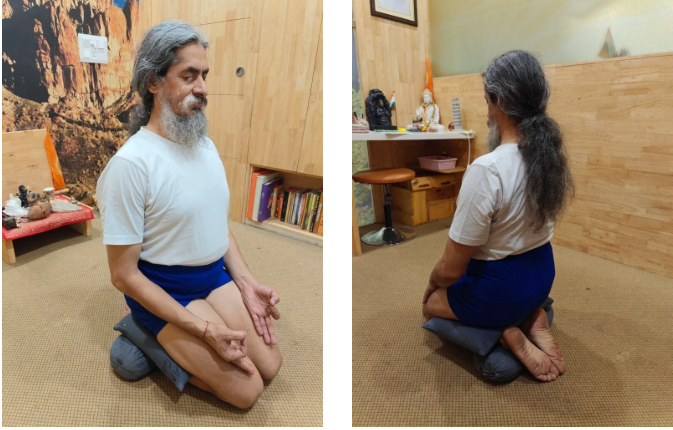
If you have knee discomfort, you can still enjoy the benefits of Vajrasana using props such as a cushion, bolster, or folded blanket.

Method 1: Using a Small Cushion or Bolster

  1. Take a small round cushion or bolster.
  2. Sit in Vajrasana position.
  3. Place the cushion under your ankles.
  4. Keep your spine straight and heels together.
  5. Close your eyes and relax in a meditative state.

Method 2: Using a Cushion and Pillow

  1. Sit first in Dandasana (legs stretched forward).
  2. Slowly bend your legs and come into Vajrasana position.
  3. Place a small cushion under your ankles.
  4. Keep a pillow between your calves and thighs.
  5. This setup reduces pressure on your knees and makes sitting more comfortable.

👉 If you don’t have a bolster or cushion, you can use a pillow, folded bedsheet, or blanket instead.


Benefits of Vajrasana

  • Strengthens the digestive system.
  • Prevents indigestion, gas, acidity, and bloating.
  • Promotes proper digestion when practiced after meals.
  • Enhances blood circulation in the abdominal region.
  • Improves calmness and focus during meditation.

Precautions

  • Those with knee pain should use props and avoid sitting directly on the heels.
  • Keep your spine straight while sitting.
  • Practice right after meals, but do not sit for too long.

Conclusion

Practicing Vajrasana after meals helps relieve acidity, bloating, and digestive issues naturally and effectively.

So dear friends,
Warm regards and heartfelt greetings to all of you.
Stay happy, cheerful, and blissful always! 🌸

Yogacharya Dhakararam
Founder – Yogapeace Sansthan
Solution for Stomach Problems – Part 1

Dear Friends,

A warm and smiling welcome to all of you!
We greet you in our program “Ek Kadam Svasthya Se Anand Ki Ore”One Step from Health to Happiness.

Dear friends, how are you?
Say it aloud — I am joyful!
We all must spread happiness in this world.
Always stay cheerful — because you are alive!

Many people go to sleep at night and never wake up in the morning.
So, be grateful and stay joyful — because God has created you for a special purpose.


Today’s Topic – Vajrasana (Thunderbolt Pose)

Today, let’s talk about Vajrasana
its correct method, precautions, and important tips.

According to our ancient yogic texts, Vajrasana is the only asana that can be practiced after eating food.
It strengthens the digestive system, helps relieve indigestion and gas, and promotes overall stomach health.

While modern understanding allows for certain gentle postures after meals,
the scriptures specifically recommend Vajrasana as the most beneficial.


Why Vajrasana is Important

Most health issues begin with poor digestion.
If our food digests properly, the body remains healthy and diseases stay away.

Vajrasana enhances the digestive process and thus can be considered a powerful remedy for stomach problems.


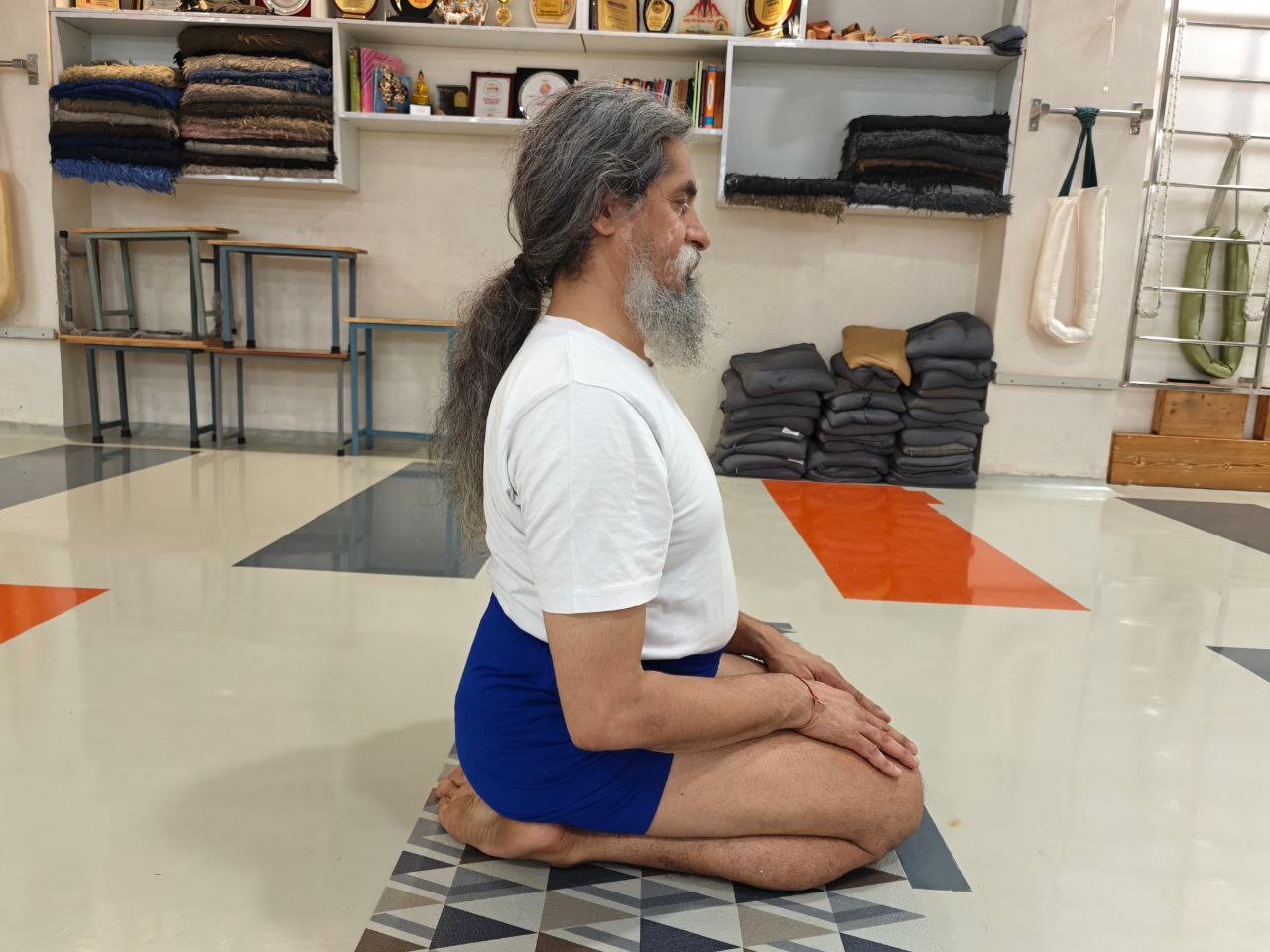
How to Practice Vajrasana

  1. Sit with both legs stretched straight in front of you (in Dandasana).
  2. Fold your right leg and place it under the right buttock.
  3. Fold your left leg and place it under the left buttock.
  4. Keep your spine straight.
  5. Join both heels together.
    • If this feels difficult, allow the heels to fall slightly outward and join the toes instead.
  6. While sitting, gently move the skin of the calves outward.
  7. Place both palms on your thighs.
  8. Close your eyes and relax in a meditative state.

You can sit in Vajrasana while watching TV or doing other light activities —
but the best time to practice is after meals, focusing on your breath and maintaining calm awareness.


Benefits of Vajrasana

  • Strengthens the digestive system.
  • Prevents indigestion and gas problems.
  • Activates abdominal organs and improves their functioning.
  • Helps in secretion of enzymes and hormones.
  • Keeps bones flexible and strong.

Precautions

  • People with knee pain should avoid this posture directly.
  • Keep your back straight while sitting.

Next time, we’ll share how people with knee discomfort can practice Vajrasana using props or support.


In Conclusion

So dear friends,
Warm regards and gratitude to all of you. 🙏

Yogacharya Dhakararam
Founder – Yogapeace Sansthan

Universal Prayer

Om…
Om…

Ye…
Shiva…
Ao…
Shiva…
Ye…
Shiva Shiva
Shiva Shambhu…
(Music)
Jai Jai Shambhu…
Har Har Mahadev…

Shiva Shiva
Shiva Shiva Shambhu..
Shiva Shiva
Shiva Shiva Shambhu..
Shiva Shiva
Jai Jai Shiva
Shiva Shiva
Jai Jai Shiva
Shiva Shiva
Jai Jai Shiva
Shiva Shiva
Jai Jai Shiva
Shiva Shiva..
Jai Jai Shiva.
Shiva Shiva ..
Jai Jai Shiva.
And we pray Shiva
And we pray Shiva
Narayan Narayan Narayan..
Narayan Narayan Narayan…
Shiva Shiva
Jai Jai Shiva
Shiva Shiva
Jai Jai Shiva
And we pray Shiva
And we pray Shiva
Narayan Narayan Narayan..
Narayan Narayan Narayan…
(Music)

Jesus Jesus Jai Jai Jesus
And we pray Jesus
And we pray Jesus
Narayan Narayan Narayan..
Narayan Narayan Narayan…

Jesus Jesus Jai Jai Jesus
And we pray Jesus
And we pray Jesus
Narayan Narayan Narayan..
Narayan Narayan Narayan…
(Music)

Allah Hu Allah Jai Jai Jai Allah
And we pray Allah
And we pray Allah
Narayan Narayan Narayan..
Narayan Narayan Narayan…

Allah Hu Allah Jai Jai Jai Allah,
Allah Hu Allah Jai Jai Jai Allah
And we pray Allah
And we pray Allah
Narayan Narayan Narayan..
Narayan Narayan Narayan…

Buddha Narayan, Mahavir Narayan, Sai Narayan, Nanak Narayan, Devi Narayan
Narayan Narayan Narayan..
Narayan Narayan Narayan…

Buddha Narayan, Mahavir Narayan, Sai Narayan, Nanak Narayan, Devi Narayan
Narayan Narayan Narayan..
Narayan Narayan Narayan…

Narayan Narayan Narayan
Jai Jai Shambhu oo
Narayan Narayan Narayan
Har Har Mahadev
Narayan Narayan Narayan

​विश्वप्रार्थना

ॐ…..
ॐ…..

ये…
शिव…
आ.ओ..
शिव ..
ये..
शिव शिव
शिव शंभू….ooo
जय जय शंभू..ooo
हर हर महादेव..
शिव शिव
शिव शिव शंभू..oo
शिव शिव
शिव शिव शंभू..oo
शिव शिव
जय जय शिव
शिव शिव
जय जय शिव
शिव शिव
जय जय शिव
शिव शिव ज
जय जय शिव
शिव शिव
जय जय शिव
शिव शिव
जय जय शिव
and we pray shiva
and we pray shiva
नारायण नारायण नारायण
शिव शिव
जय जय शिव
शिव शिव
जय जय शिव
and we pray shiva
and we pray shiva
नारायण नारायण नारायण

जीसस जीसस जय जय जीसस
and we pray jesus
and we pray jesus
नारायण नारायण नारायण

जीसस जीसस जय जय जीसस
and we pray jesus
and we pray jesus
नारायण नारायण नारायण

अल्लाह हू अल्लाह जय जय जय अल्लाह,अल्लाह हू अल्लाह जय जय जय अल्लाह
and we pray अल्लाह
and we pray अल्लाह

नारायण नारायण नारायण

अल्लाह हू अल्लाह जय जय जय अल्लाह,अल्लाह हू अल्लाह जय जय जय अल्लाह
and we pray अल्लाह
and we pray अल्लाह

नारायण नारायण नारायण

बुद्धा नारायण, महावीर नारायण, साई नारायण, नानक नारायण, देवी नारायण
नारायण नारायण नारायण

बुद्धा नारायण, महावीर नारायण, साई नारायण, नानक नारायण, देवी नारायण
नारायण नारायण नारायण

नारायण नारायण नारायण
जय जय शंभू oo
नारायण नारायण नारायण
हर हर महादेव
नारायण नारायण नारायण

How to Sit Cross-Legged Correctly for Better Health and Balance

Dear friends,
Warm greetings and a smiling namaste to all of you!
Welcome to our wellness series — “One Step from Health to Happiness.”

Today’s topic is:
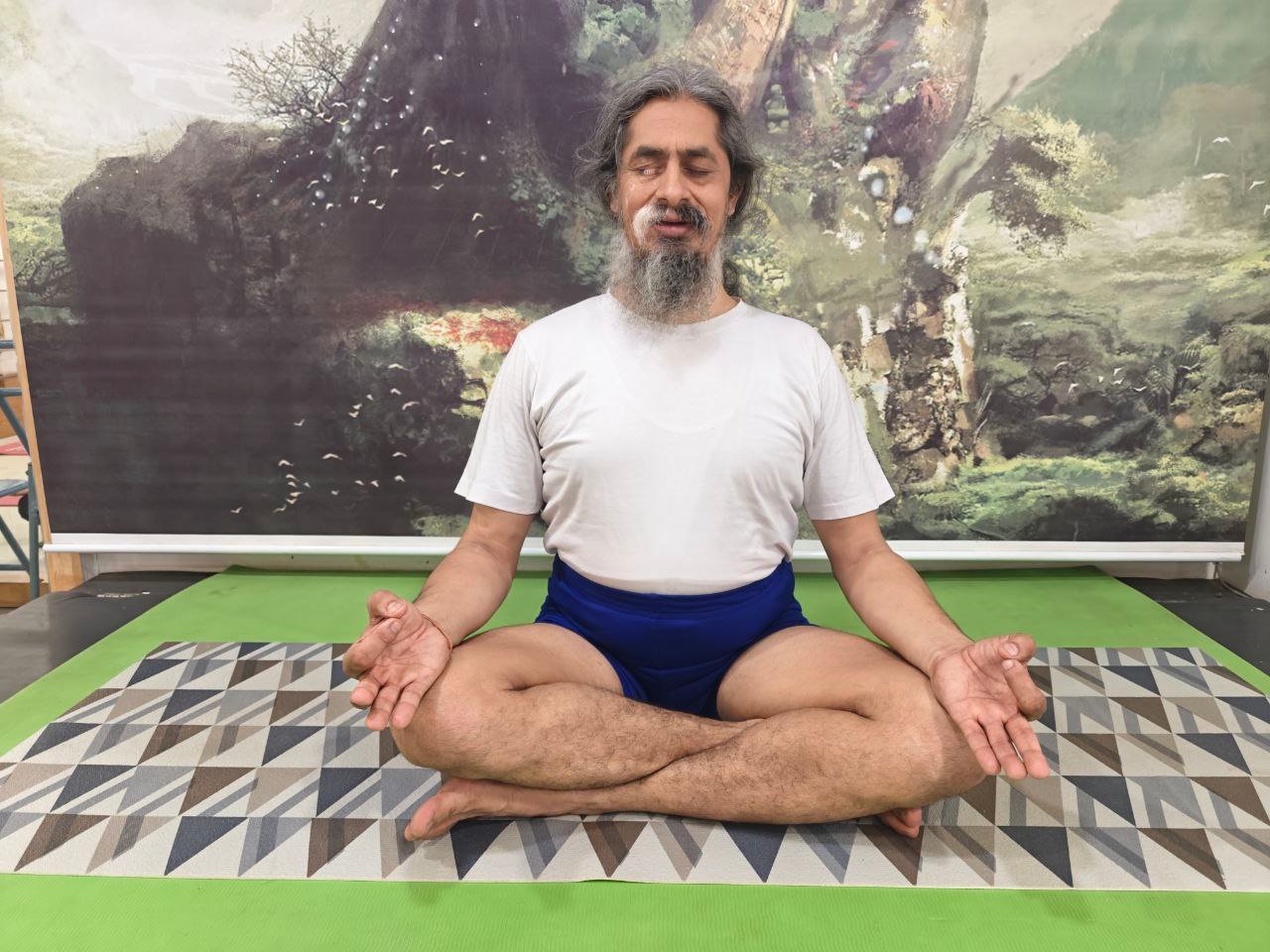
How should you sit? How to sit cross-legged (Sukhasana) in the right way.

Why Sitting Correctly Matters

When we sit incorrectly, it can lead to back pain, knee pain, calf strain, and ankle discomfort.
Our body’s weight gets unevenly distributed, creating imbalance and tension.

It’s just like a car that tilts to one side — it needs alignment and repair.
Similarly, when our body tilts, it gives us signals through pain and stiffness.

Observe Your Body

Now, sit cross-legged and close your eyes.
Try to feel — where is your body weight falling?
Is it more on your right hip or your left hip?

If it’s uneven, it means your sitting posture is not correct.

When we sit wrongly:

  • The abdomen bulges outward
  • The chest collapses
  • The spine bends or curves

How to Sit Properly

When we sit correctly:

  • The abdomen is slightly pulled in
  • The spine remains straight
  • The chest expands naturally

Now follow these simple steps:

  1. Support your right hip with your palm and slightly pull it outward.
  2. Do the same for the left hip, pulling it gently to the left.
  3. Close your eyes again and observe — now your body weight feels balanced on both hips.
  4. Keep your abdomen gently pulled in and your chest lifted.

You’ll feel a sense of stability, alignment, and lightness in the body.

Step-by-Step Sitting Method

  1. Stretch both legs forward.
  2. Fold your right leg and place it under your left thigh.
  3. Fold your left leg and place it under your right thigh.
  4. Adjust your hips again as described earlier.
  5. Ensure that:
    • Your legs are comfortably placed
    • Your abdomen is drawn in
    • Your chest is open and lifted
    • Your spine is straight

When You Feel Tired

If you feel tired after sitting for some time,
stretch both legs forward, relax for a moment,
and then sit again by reversing the leg position

This time, place your left leg under the right thigh
and the right leg under the left thigh.

This maintains balance and symmetry in your body.

Now close your eyes, take a deep breath, and notice the change.

Stay Connected to the Earth

Dear friends, when we sit cross-legged on the ground,
we stay connected with the Earth.
This connection brings stability, calmness, and peace to our mind and body.

Sit correctly,
listen to your body’s signals,
and enjoy the gift of health and harmony.

Wishing you a blissful and healthy day!

– Yogacharya Dhakaram
Founder, YogaPeace Sansthan

Enhance Your Concentration with Gyan Mudra

Dear friends, a warm and cheerful greeting to you all!
Welcome once again to our series “One Step from Health to Bliss.”
We hope you all are doing great — because regular yoga practice keeps you joyful and balanced.

Today, let’s talk about Gyan Mudra — the Mudra of Knowledge and Awareness.


What is Gyan Mudra

The word Gyan means knowledge or wisdom.
Gyan Mudra is known to enhance intelligence, hearing ability, and concentration power.

Some people wonder, “How can simply joining fingers make a difference?”
But the truth is — Mudras are a complete science in themselves, known as Mudra Vigyan (The Science of Hand Gestures).
Through the practice of Gyan Mudra, one can activate the brain, sharpen focus, and gain mental stability.


The Five Elements and Our Fingers

Our body is composed of five elements (Pancha Mahabhutas)
Space (Akasha), Air (Vayu), Fire (Agni), Earth (Prithvi), and Water (Jal).

Each finger represents one of these elements:

FingerElementRepresents
ThumbFire (Agni)Energy and vitality
Index FingerAir (Vayu)Movement and thought
Middle FingerSpace (Akasha)Expansion and openness
Ring FingerEarth (Prithvi)Stability and strength
Little FingerWater (Jal)Emotion and fluidity

Why the Thumb is Important

According to Sujok Therapy, the thumb symbolizes the head or brain.
Just as our brain controls the entire body, the thumb governs all the fingers.

When the tip of the index finger (Air) touches the tip of the thumb (Fire),
an energy circuit is formed — much like an invisible electric current.
We can’t see electricity, but we feel its effect — similarly,
in Gyan Mudra, this union allows the flow of vital energy,
activating and calming the mind simultaneously.


How to Practice Gyan Mudra

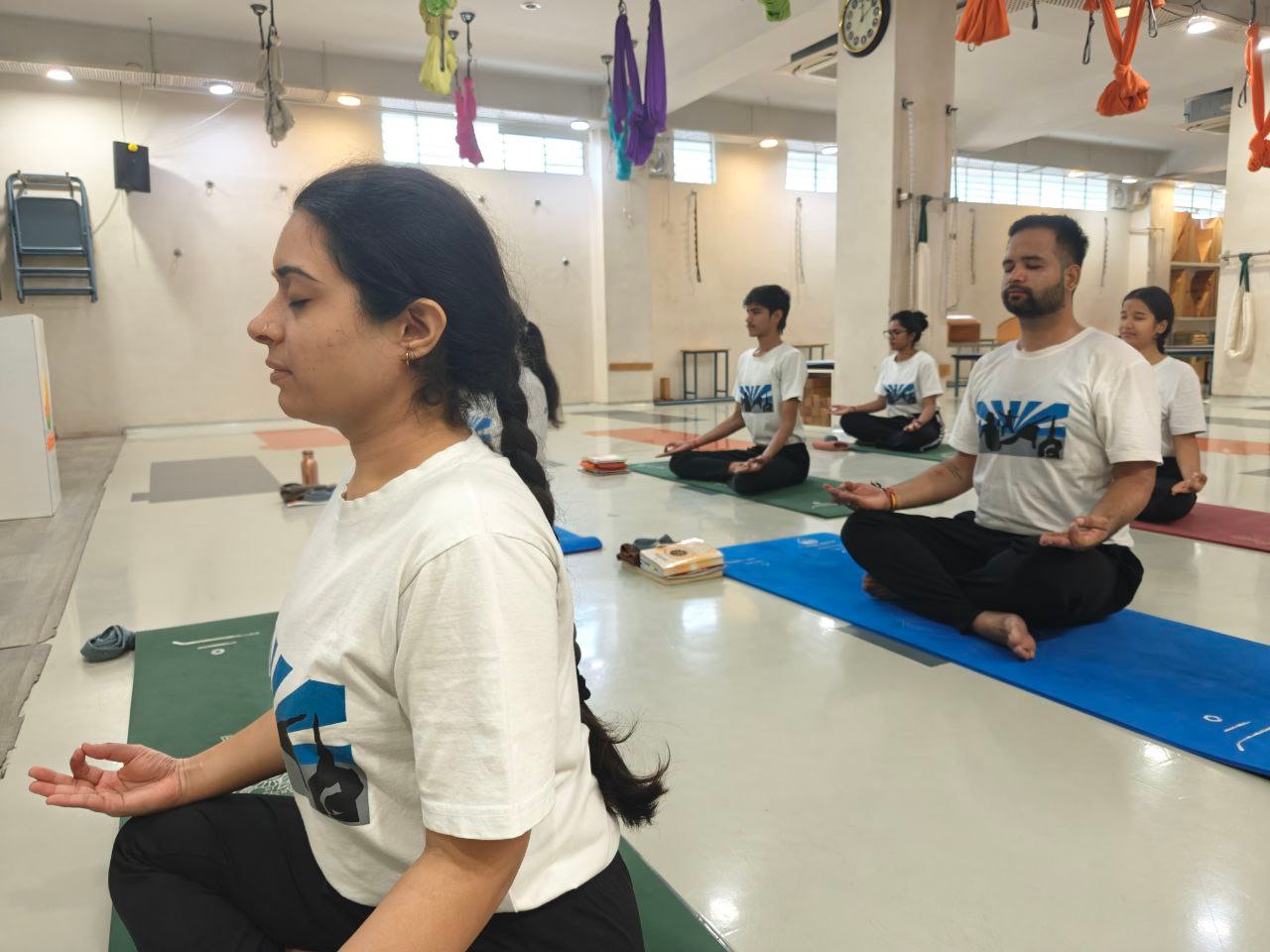
  1. Sit comfortably in Padmasana, Sukhasana, or any meditation posture.
  2. Place your hands on your knees, palms facing upward.
  3. Join the tip of your index finger and thumb together lightly.
  4. Keep the remaining three fingers straight and relaxed.
  5. Sit with your spine straight, shoulders relaxed, and eyes closed.
  6. Gently focus on your breath — inhale and exhale slowly and mindfully.

Do not rush. Let your awareness rest on your natural breathing rhythm.


Meditative Experience

As you sit in Gyan Mudra:
Your body relaxes,
your mind becomes calm,
and your concentration deepens.

You begin to feel a subtle flow of energy through your body.
Peacefulness and inner stability emerge naturally.
When you slowly open your eyes,
you’ll find yourself feeling fresh, centered, and serene.


Duration of Practice

  • Practice Gyan Mudra for 15 to 20 minutes daily, or longer if possible.
  • You may do it while sitting, standing, walking, or even lying down.
  • For best results, sit upright with a straight spine and meditate during the practice.

Benefits of Gyan Mudra

BenefitDescription
Enhances IntelligenceActivates the brain and improves logical thinking
Improves ConcentrationIncreases focus and attention span
Boosts MemoryStrengthens recall and retention power
Calms the MindReduces stress and anxiety
Promotes Self-AwarenessHelps attain inner peace and spiritual insight

Conclusion

Dear friends,
Gyan Mudra is a simple yet profoundly powerful yogic practice.
It brings harmony to the body, mind, and soul, and enhances your awareness of the present moment.

So, make it a part of your daily routine —
stay healthy, stay calm, and stay blissful!

With heartfelt salutations 🙏
Yogacharya Dhakaram
Founder – YogaPeace Sansthan

Janu Chakra for Knee Pain Relief

Dear friends,
A smiling namaste to all of you!
Welcome once again to our article series “A Step from Health to Happiness.”

Today, we will talk about Janu Chakra — a simple yet highly beneficial yogic practice for keeping your knees and legs healthy.
Earlier, we discussed Gulpha Naman and Gulpha Chakra.
Just like them, Janu Chakra can be practiced anywhere and anytime.


Meaning of Janu Chakra

The word ‘Janu’ means knee, and ‘Chakra’ means circle or rotation.
In this practice, we move the lower leg in a circular motion from the knee joint, improving flexibility and joint health.


How to Practice Janu Chakra

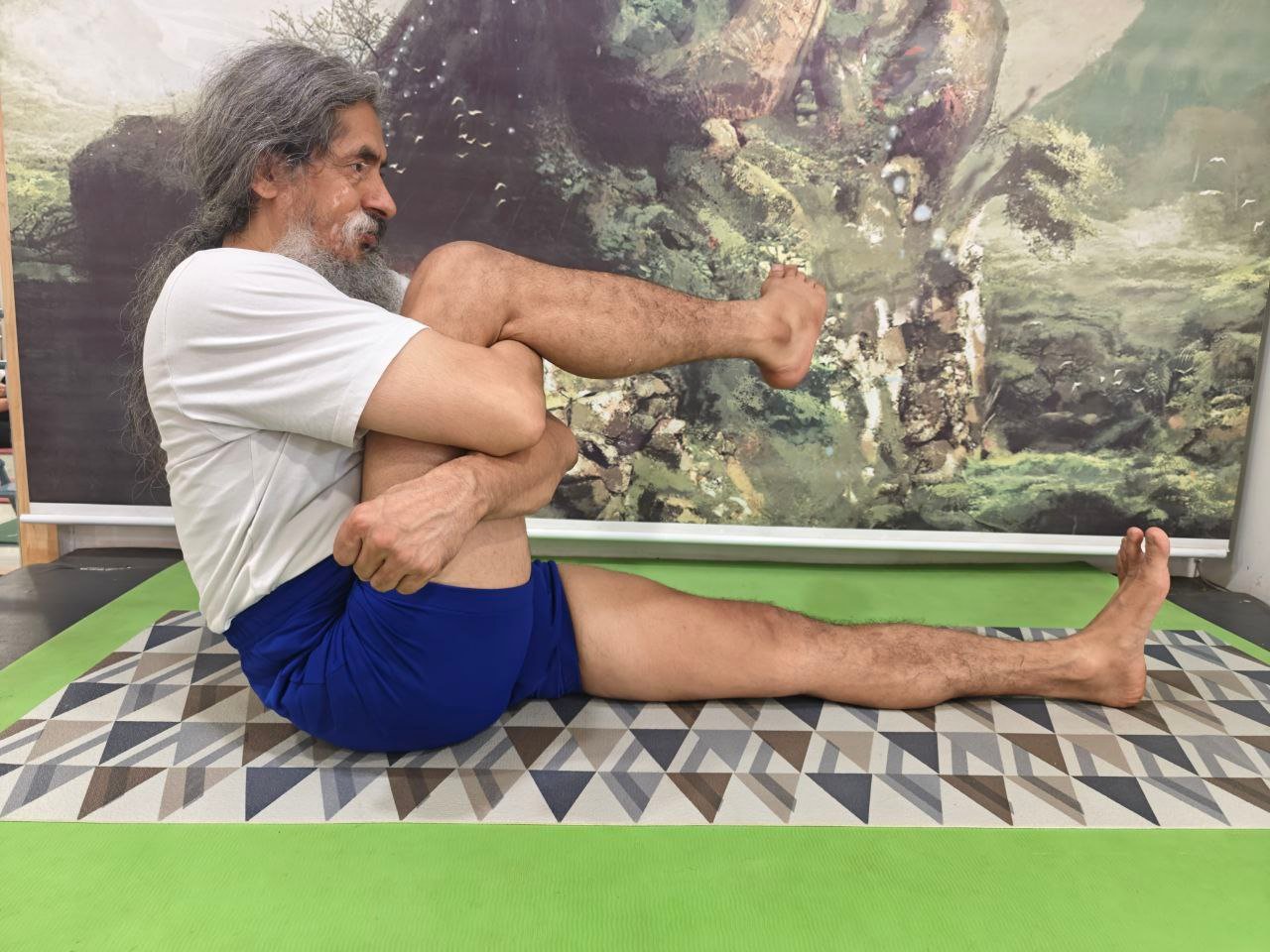
  1. Sit in Dandasana (Staff Pose).
    (If you are not familiar with Dandasana, refer to our earlier post.)
  2. Keep both legs straight in front of you.
  3. Bend your right knee and bring it close to your chest.
  4. Hold your right leg firmly behind the knee with both hands.
  5. Now rotate the lower leg in a clockwise (Dakshinavritta) direction.
    • Keep your spine straight.
    • Make three slow circular rotations.
    • This will take around one minute.
  6. Next, rotate the leg in an anti-clockwise (Vamavritta) direction.
    • Each rotation should take about 20 seconds.
    • Complete three rotations again (about one minute).
  7. Repeat the same process with your left leg
    • First rotate clockwise, then anti-clockwise.
    • Make sure to rotate equal times in both directions.
  8. After completing both legs, close your eyes and observe your body.
    • Notice the difference in your legs before and after the practice.

Time required:

  • Right leg – 2 minutes
  • Left leg – 2 minutes
  • Observation – 1 minute
    👉 Total time: 5 minutes

Precautions

  • Your hips and thighs should remain steady during the movement.
  • Keep your spine straight and hold the knee firmly.
  • Perform the rotation slowly and gently, without jerks.
  • Ensure equal rotations in both clockwise and anti-clockwise directions.

Benefits

  • Strengthens the knee joints.
  • Improves flexibility of leg muscles.
  • Enhances blood circulation in the legs.
  • Provides natural relief from knee stiffness and pain.

So, dear friends,
Make this practice a daily routine and experience the lightness and strength in your knees.

With warm regards,
Yogacharya Dhakaram
Founder – YogaPeace Sansthan

Discover Peace and Strength with Dandasana: The Foundation of Seated Yoga

Greetings to You All!

Dear friends, a warm welcome to everyone joining the “One Step Towards Health to happiness” program. Today, we will explore Dandasana, a fundamental seated posture that serves as the base for many yoga practices.

Whenever we perform seated yoga poses, we begin and return to Dandasana. It is not just a starting position but also a way to relax and realign the body after other asanas. This simple yet powerful pose plays a key role in improving posture and promoting mindfulness.

How to Practice Dandasana

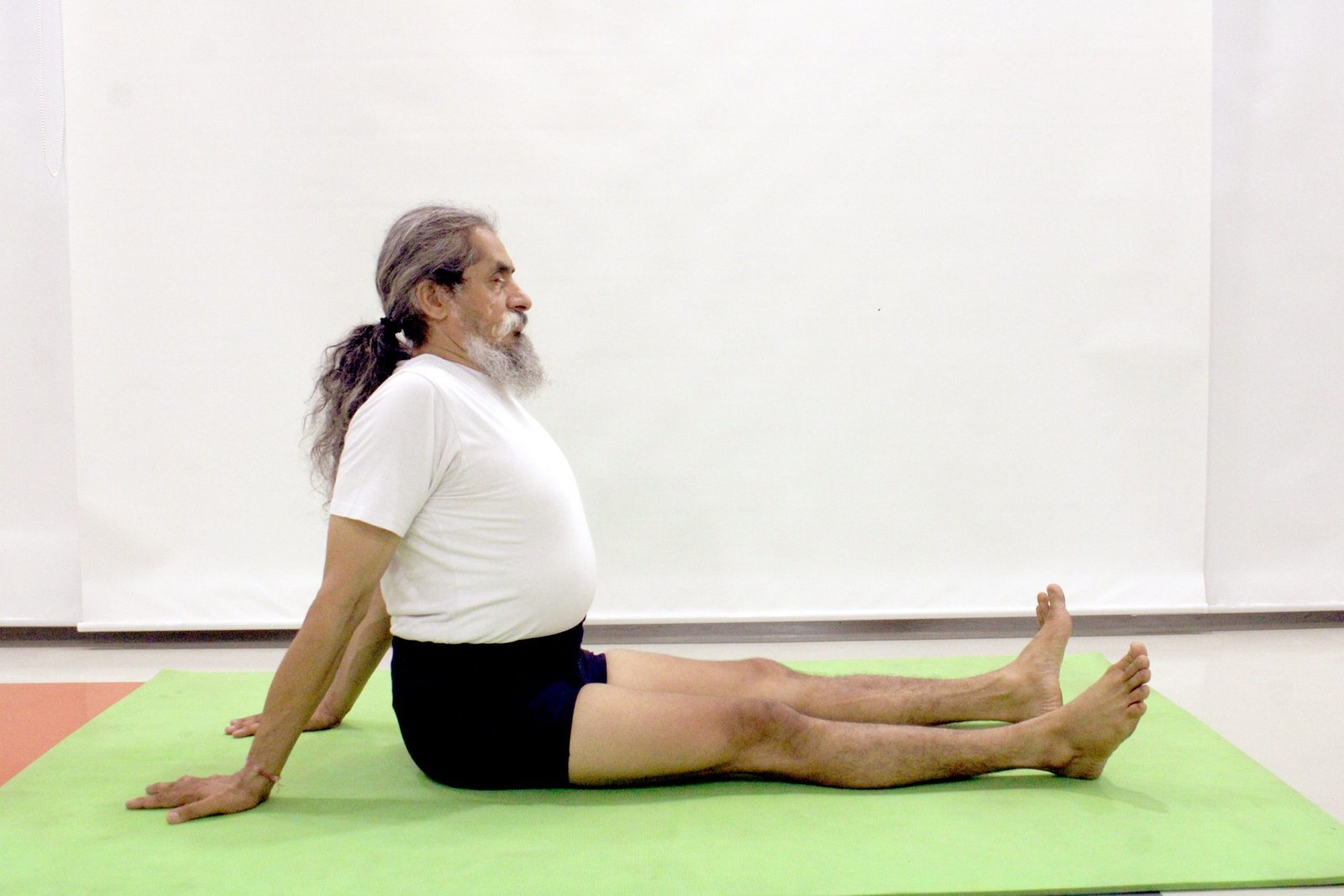
  1. Sit comfortably on the floor with your legs stretched straight in front of you, keeping a gap of one to one and a half feet between them.
  2. Relax your legs—point your toes outward and heels inward.
  3. Place your hands behind your waist, fingers pointing backward, and gently open your chest.
  4. Sit tall—stretch your shoulders back, expand your chest, and keep your spine, neck, and head in a straight line.
  5. Close your eyes, relax your facial muscles, and maintain a soft, happy expression.
  6. Breathe deeply—long, steady breaths will help oxygen flow efficiently through your body.

When the chest is expanded, more oxygen enters the lungs, supporting heart and respiratory health. Make Dandasana a part of your daily routine to experience its full benefits.

Benefits of Dandasana

  • Promotes peace of mind and body – Helps calm the nervous system.
  • Strengthens back muscles – Supports a healthy, pain-free spine.
  • Opens the shoulders and chest – Enhances posture and shoulder strength.
  • Improves spinal health – Keeps the backbone aligned and flexible.
  • Boosts lung and heart function – Deep breathing increases oxygen intake.

Dandasana is more than just a sitting pose—it’s a foundation for strength, relaxation, and mindful breathing. By practicing it regularly, you invite balance and vitality into your life.

Stay cheerful, stay happy, and keep embracing the joy of yoga!

Thank you very much to all of you.


Yogacharya Dhakaram
Founder, YogaPeace Sansthan

From Learner to Implementer: A YogaPeace Success – Yogi Pawan from Jaipur

I came to know about Guru ji online through google. I have completed 1800 hours teacher training course (general yoga, slimming yoga, medical yoga) in different parts from YogaPeace Sansthan. Guru ji’s way of teaching and gestures, postures and everything is excellent. And the atmosphere of the institute is very good. I have been to 2-3 good yoga institutes before this but Guru ji’s way of teaching yoga is the best.

I think YogaPeace Sansthan is the best way to understand yoga from the spiritual (anandam) and living perspective and to implement it in your life….. thank you guru ji (Yogacharya dhakaram ji)

Finding Inner Happiness Through Guruji – Bhanu Shekhawat

My experience with Yogacharya dhakaram Guruji has been nothing short of transformative. Guruji is the living embodiment of happiness and serenity, and to be in their presence is to feel an instant sense of peace. Their teachings go far beyond the physical practice of yoga; they delve into the deeper layers of the mind, body, and spirit. Every class is not just a session of asanas but a journey into understanding oneself.

I am forever grateful to Guruji for showing me that true happiness comes from within and for guiding me on this lifelong journey of self-discovery and contentment. If you are looking for a Guru who will not only guide you through yoga but also lead you towards true joy and fulfillment, look no further than my guruji. They are the real definition of happiness.